
Knowing your blood type is about more than just knowing a letter. It is a vital piece of your health data that can help you protect your long term wellbeing and heart.
Most people never stop to consider what their specific type means for their body. They assume every person faces the same risks. But the medical data says something else.
Because some are born with a hidden edge.

There are four main blood groups that define the population. These are A, B, AB, and O. Each group is split further by the presence of a rhesus protein.
This protein is what determines if you are positive or negative. Most individuals carry it. But being negative is not a disadvantage in the world of cardiac health.
The researchers at Northwestern Medicine have identified a massive gap in risk. It turns out that Type O individuals sit at the lowest risk for heart attacks and clots.
The reason is hidden in the chemistry.
This is a biological reality that stays consistent across both types. The reason for this safety net comes down to the actual thickness of the blood in your veins.
People with Type A, B, or AB blood have higher levels of clotting factors. These are specific proteins that cause the blood to thicken and turn into a solid mass.
While clotting is necessary to heal a wound, it can be dangerous inside a vein. If the blood becomes too thick, it can lead to a sudden and life-threatening blockage.
And the danger does not stop at the heart.
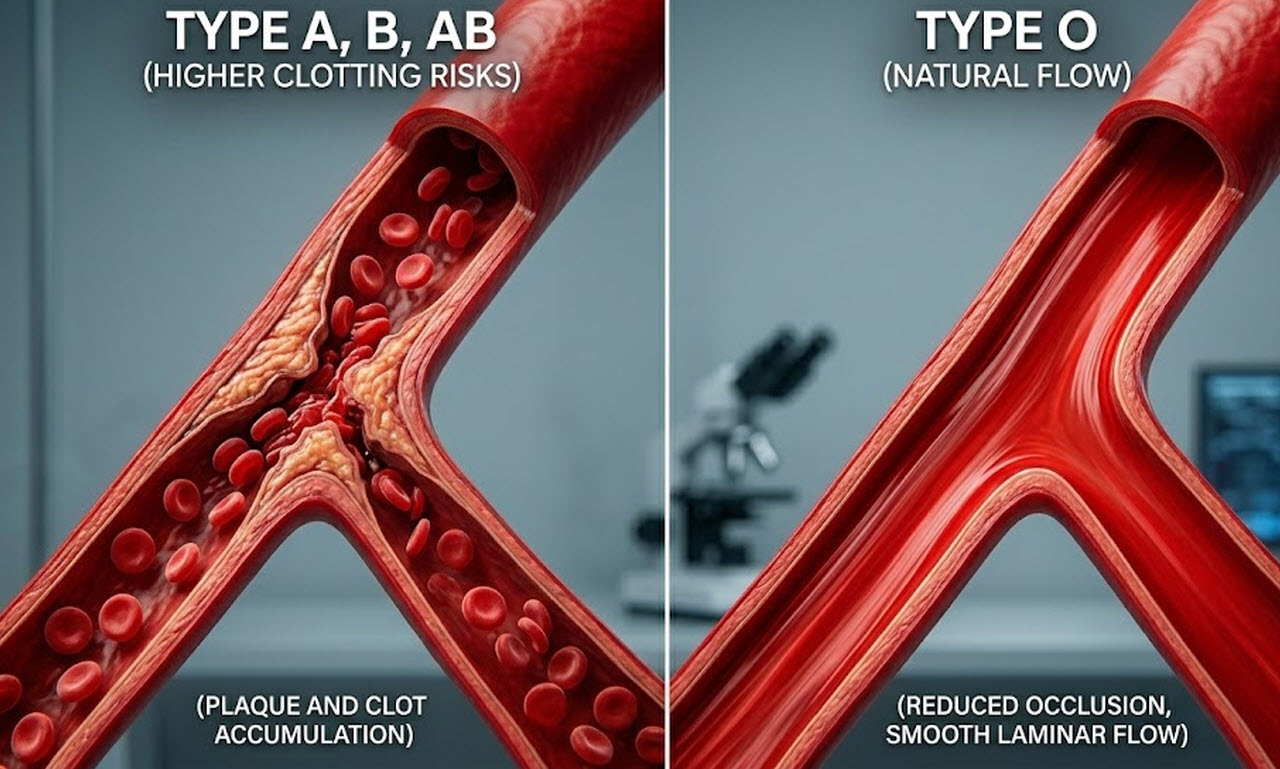
Those with Type O blood have a different internal environment. Their blood is naturally less prone to this thickening process. It remains fluid and flows more easily.
The data also looks at the stomach. Those with A, B, and AB types face a higher risk of developing certain cancers. This includes a higher rate of gastric conditions.
Lucky Type O individuals have a lessened risk of these issues. They also show a reduced risk of colorectal cancers. It is a significant genetic advantage for them.
Then the global data got even more specific.
The pandemic highlighted these differences even further. During the crisis, data showed that Type A individuals were more likely to suffer badly from the virus.
Dr. Sanjay Aggarwal is a general physician who has studied these trends. He notes that the Type O group is often at a lower risk for various cancers, including the pancreas.
In the UK, the O-positive type is the most common. It makes up about 35 percent of people. They are followed by the A-positive group at roughly 30 percent of the total.
But one rare group carries a different burden.

The O-negative group is known as the universal donor. They make up 13 percent of the population. Their blood can be given to almost anyone in a high stakes emergency.
The rarest group in the UK is AB-negative. Only one percent of the population carries this specific code. For them, understanding heart health is a major priority today.
If you carry the A, B, or AB marker, you should focus on a heart healthy lifestyle. You cannot change your DNA, but you can control your diet and your daily activity.
The strategy for survival is simple.
High clotting risks can be managed with the right choices. Staying hydrated and keeping active are the best ways to counter the natural thickness of your specific blood.
Check your medical records or ask about your type during your next blood test. It is a simple piece of information that can help you plan for a much healthier future.
Science is finally unlocking the secrets hidden in our veins. Every drop of blood tells us exactly what we need to watch out for as we navigate our daily health journey.
